
The Document Collection Upgrade: How Tax Firms Are Replacing Scattered Files, Missed Requests, and Manual Tracking With One Centralized System
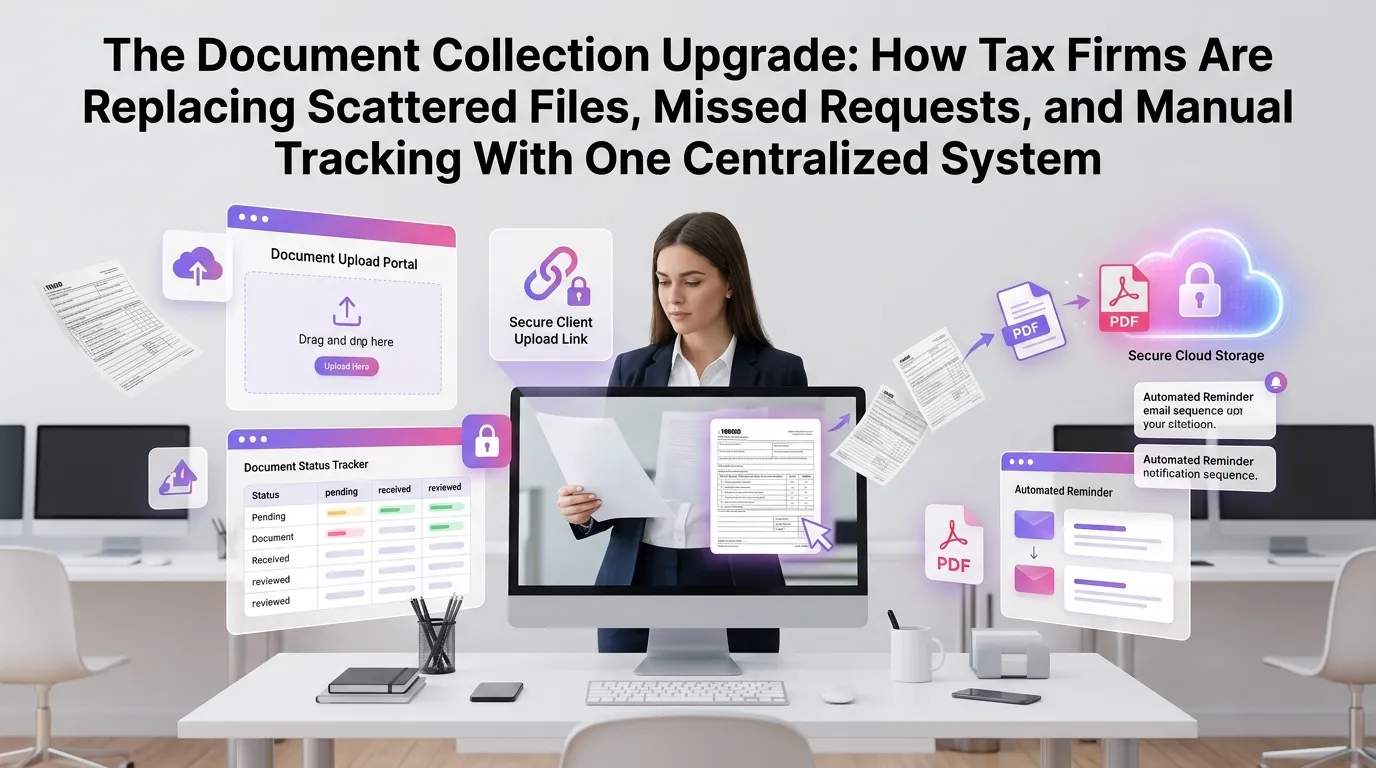
Every tax season, the same chaos unfolds at firms across the country. Clients send W-2s via email, drop off paper documents at the front desk, upload files to a personal Dropbox folder, and text photos of receipts — all at the same time. Staff spend hours chasing missing information, reconciling scattered files, and manually updating spreadsheets just to know where each client's return stands. Effective document collection and management for tax firms has never been more critical, yet most firms are still operating with systems that weren't designed for the demands of modern tax practice. That ends here.
Why Traditional Document Collection Is Breaking Tax Firms
The average tax professional spends a significant portion of their workday on non-billable administrative tasks — and document collection is one of the biggest culprits. According to the AICPA, administrative inefficiency is consistently ranked among the top operational challenges for accounting and tax firms of all sizes.
When documents arrive through five different channels simultaneously, nothing stays organized for long. Files get misnamed, emails get buried, and critical documents go missing entirely — often discovered only after a deadline has passed.
The Real Cost of Scattered Files
The cost isn't just time. Missed documents mean delayed returns, frustrated clients, and potential compliance issues with the IRS. A single missed 1099 or overlooked K-1 can trigger an amendment, an audit flag, or a penalty — none of which reflect well on your firm.
Beyond compliance risk, there's the reputational damage. Clients who have to resend documents multiple times, or who receive repeated "reminder" requests for files they already submitted, quickly lose confidence in their tax professional. In a relationship-driven business, that trust is everything.
Manual Tracking Is Not a System
Many firms rely on spreadsheets, sticky notes, or shared email inboxes to track what's been received and what's still outstanding. These tools weren't built for document management — they're workarounds that create more work than they solve.
When one team member updates a spreadsheet and another doesn't see it, clients get contacted twice for the same document. When an email thread grows to 30 replies, no one can quickly find the attachment that matters. Manual tracking is a system only in the loosest sense of the word.
What Centralized Document Collection and Management for Tax Firms Actually Looks Like
A true document management system for tax firms doesn't just store files — it organizes them, tracks their status, automates follow-ups, and gives every team member a single source of truth. This is the foundation of what a modern tax firm automation platform is designed to deliver.
Centralized systems bring every document, every client request, and every status update into one place. Instead of checking three different platforms to understand where a client's return stands, your staff can see everything at a glance.
Client-Facing Document Portals
One of the most impactful features of a centralized system is a branded, secure client portal. Clients receive a single link — not an email chain, not a shared folder, not a text thread — where they can upload all requested documents in one organized place.
This eliminates the confusion of multiple submission channels and gives clients a clear, professional experience. It also signals that your firm operates with structure and intention, which builds confidence before the return is even started.
Automated Document Request Workflows
Rather than manually sending individual email requests for each missing document, a centralized system allows you to build templated request workflows. You define which documents are needed for each return type — individual, business, trust, estate — and the system sends structured requests automatically.
Clients receive a clear checklist of exactly what's needed. As they upload each item, the system marks it complete and updates the firm-side dashboard in real time. No more guessing games about what's been received.
Automated Reminders Without the Awkwardness
Following up with clients for missing documents is one of the most uncomfortable parts of tax practice. It's time-consuming, and it can feel like nagging — even when the client is the one holding up their own return.
Automated reminder sequences remove the human awkwardness from the equation. The system sends polite, professional follow-up messages at defined intervals until the document is received. Staff can focus on actual tax work instead of playing email tag.
How TaxFlow Transforms the Document Collection Experience
TaxFlow by MultidexTech was built specifically to solve the document collection and organization challenges that tax firms face every season. It's not a generic file-sharing tool repurposed for tax use — it's purpose-built for the way tax professionals actually work.
With TaxFlow, every client engagement starts with a structured document request that's tied directly to that client's profile. Documents arrive in an organized, searchable repository — not an email inbox or a desktop folder labeled "2024 Taxes FINAL (3)."
Real-Time Status Dashboards
TaxFlow's dashboard gives your team an at-a-glance view of every active client: what's been received, what's still outstanding, and which returns are ready to move forward. This visibility eliminates the internal back-and-forth that slows down preparation teams.
Managers can see bottlenecks before they become crises. If 40 clients are all missing their brokerage statements in week three of tax season, that's visible immediately — and corrective action can be taken proactively rather than reactively.
Secure, Compliant File Storage
Tax documents contain some of the most sensitive personal and financial information that exists. Storing them in consumer-grade tools like personal Dropbox accounts or standard Gmail attachments creates real security and compliance risks.
TaxFlow stores all documents with enterprise-grade encryption and access controls. Every file upload, download, and access event is logged, giving your firm a complete audit trail. This matters not just for security, but for professional liability and compliance with data protection standards outlined by organizations like the Journal of Accountancy.
Seamless Team Collaboration
When a document arrives, the right person on your team needs to know about it immediately. TaxFlow's notification and assignment features ensure that new uploads trigger the appropriate workflow — whether that means alerting a preparer, moving a return to the next stage, or flagging a document for review.
No more "did you see the email from the Johnsons?" conversations. The system surfaces the right information to the right people automatically.
The Broader Impact on Firm Efficiency and Client Experience
Upgrading your document collection and management for tax firms isn't just an operational decision — it's a strategic one. Firms that implement centralized systems consistently report faster turnaround times, higher client satisfaction scores, and reduced stress during peak season.
When your team isn't spending hours tracking down missing files, they can focus on the work that actually requires their expertise: analysis, planning, and building client relationships. That's where the real value of a tax professional lies.
Scaling Without Hiring
One of the most compelling benefits of automation is the ability to handle more clients without proportionally increasing headcount. A well-designed document management system effectively multiplies your team's capacity by eliminating repetitive, low-value tasks.
A firm that could previously handle 400 returns per season with a team of five can often scale to 600 or more with the same team — simply by removing the administrative drag that was consuming their time. That's growth without the overhead.
A Better Experience for Clients
Clients notice the difference immediately. Instead of receiving vague email requests and having to dig through old messages to figure out what they've already sent, they get a clear portal with a checklist, real-time confirmation when uploads are received, and professional communication throughout the process.
That experience builds loyalty. Clients who feel well-served by their tax firm don't shop around — and they refer their friends and colleagues. The downstream revenue impact of a better client experience is substantial and often underestimated.
If you're ready to see what this looks like in practice, you can start your free trial and experience the difference firsthand. No credit card required, no lengthy onboarding — just a modern system ready to work the way your firm needs it to.
Making the Switch: What to Expect
Transitioning from scattered, manual processes to a centralized system doesn't have to be disruptive. The key is choosing a platform designed for tax firms specifically — one that understands the seasonal nature of the work, the document types involved, and the client communication patterns that matter most.
TaxFlow is designed for rapid onboarding. Most firms can set up their first client workflows within a single day, and the learning curve for both staff and clients is minimal. The portal is intuitive enough that clients don't need instructions — they simply log in and follow the prompts.
For firms exploring options and pricing, you can view our pricing plans to find the tier that fits your firm's size and volume. TaxFlow scales from solo practitioners to multi-location firms with hundreds of staff.
Frequently Asked Questions
What is document collection and management for tax firms?
Document collection and management for tax firms refers to the systems and processes used to request, receive, organize, and store client tax documents. A modern approach centralizes all of this into one platform, replacing scattered emails, shared drives, and manual tracking with automated workflows and a single source of truth.
How does a centralized document system improve client communication?
Centralized systems give clients a single, secure portal where they can upload all requested documents and track what's still outstanding. Automated reminders handle follow-up professionally, reducing friction and eliminating the need for staff to send manual chase emails. Clients receive real-time confirmation when documents are received, which builds trust and reduces anxiety.
Is TaxFlow secure enough for sensitive financial documents?
Yes. TaxFlow uses enterprise-grade encryption and access controls to protect all client documents. Every file interaction is logged with a full audit trail, ensuring your firm meets data security and professional compliance standards. This is a significant upgrade over consumer tools like personal cloud storage or standard email attachments.
Can TaxFlow integrate with my existing tax preparation software?
TaxFlow is designed to complement your existing tax preparation workflow. While specific integration capabilities depend on your current software stack, TaxFlow's centralized document repository and client portal can be used alongside most major tax preparation platforms. Contact the MultidexTech team for details on your specific setup.
How long does it take to onboard a tax firm to TaxFlow?
Most firms are fully operational within a single day. TaxFlow's setup process is streamlined for tax professionals, and the client-facing portal requires no technical knowledge to use. Staff training is minimal because the interface is designed to be intuitive from day one. You can begin with a 14-day free trial to evaluate the platform before committing.
Ready to leave the chaos behind? MultidexTech offers a 14-day free trial of TaxFlow — no credit card required, no lengthy contracts. Experience what it feels like to have every client document organized, every request tracked, and every deadline met with confidence. Start your free trial today and see why tax firms are making the switch. Want to learn more about automation strategies before you dive in? Explore our blog for guides, case studies, and expert insights built for modern tax practices.
```Related Posts
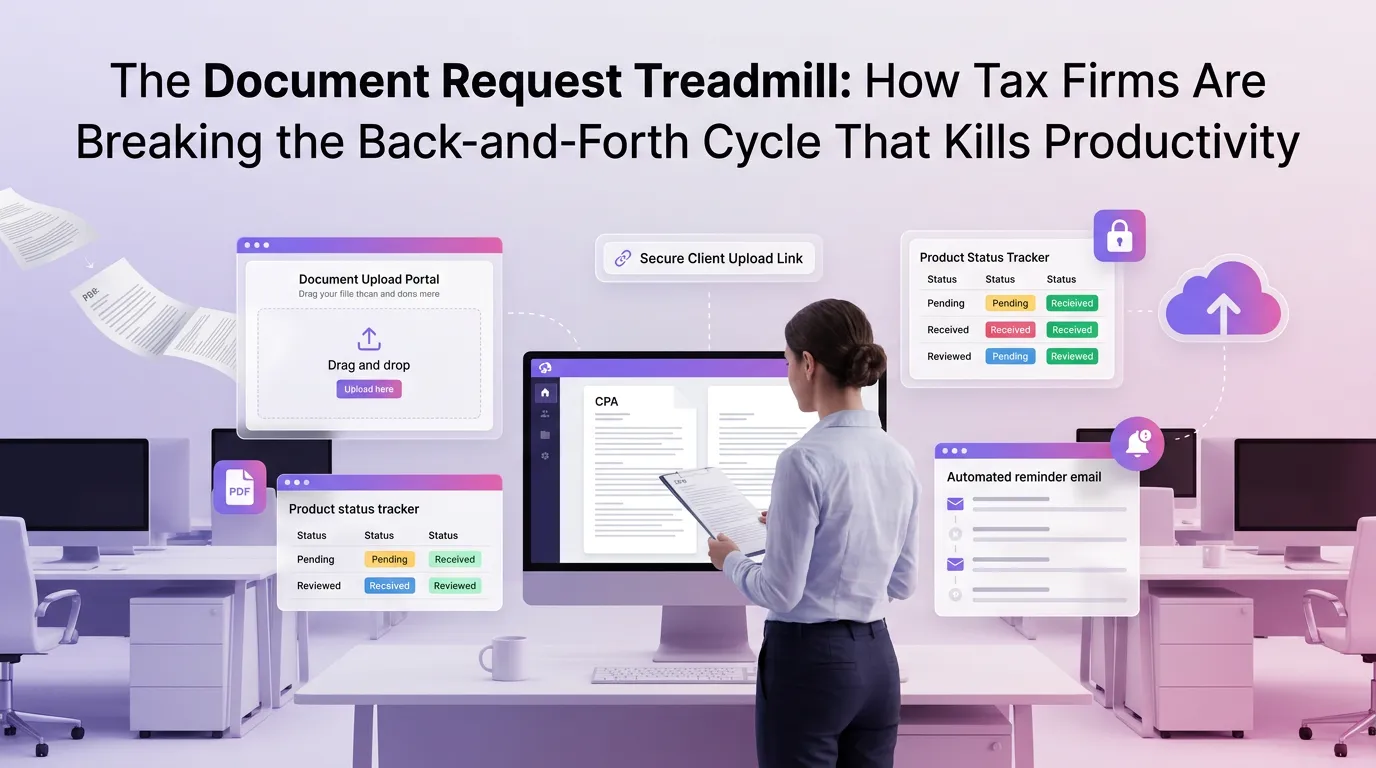
The Document Request Treadmill: How Tax Firms Are Breaking the Back-and-Forth Cycle That Kills Productivity
12 min read
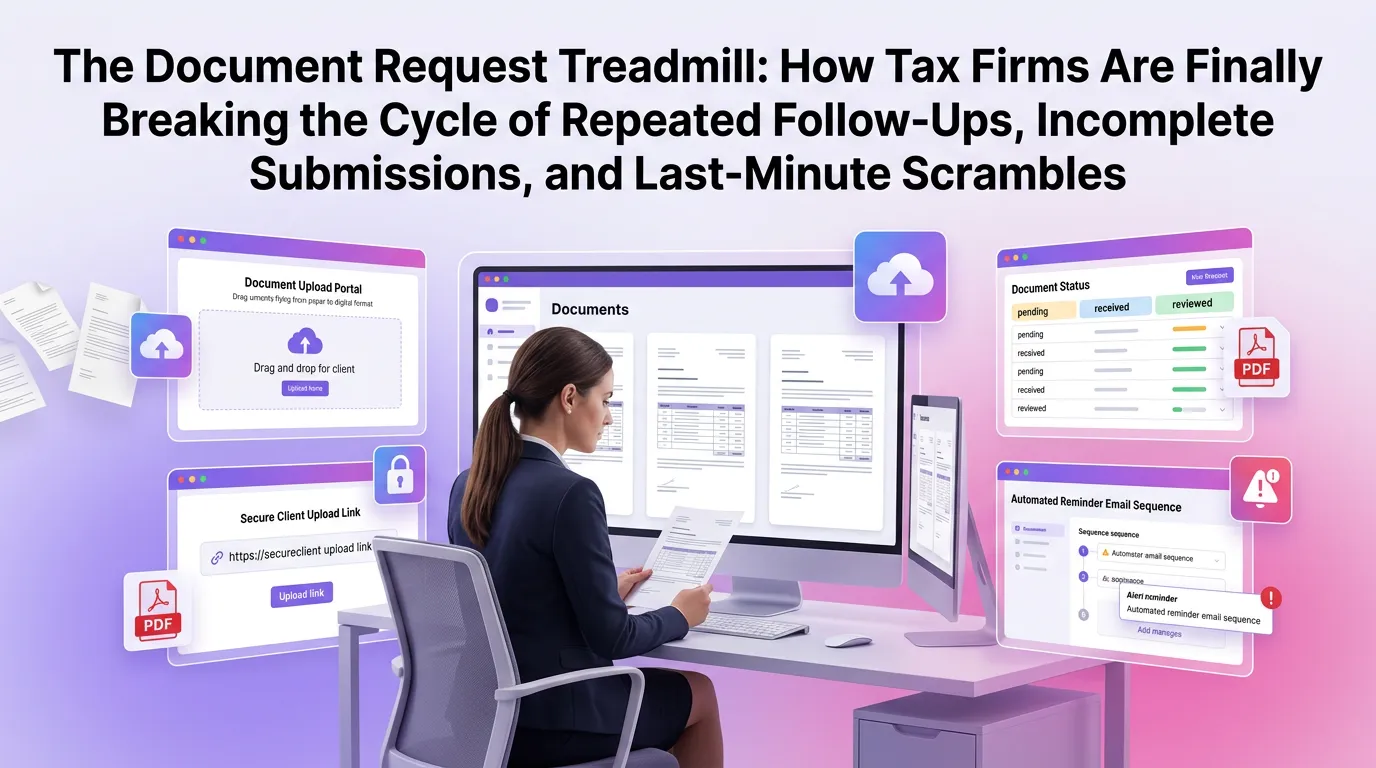
The Document Request Treadmill: How Tax Firms Are Finally Breaking the Cycle of Repeated Follow-Ups, Incomplete Submissions, and Last-Minute Scrambles
12 min read
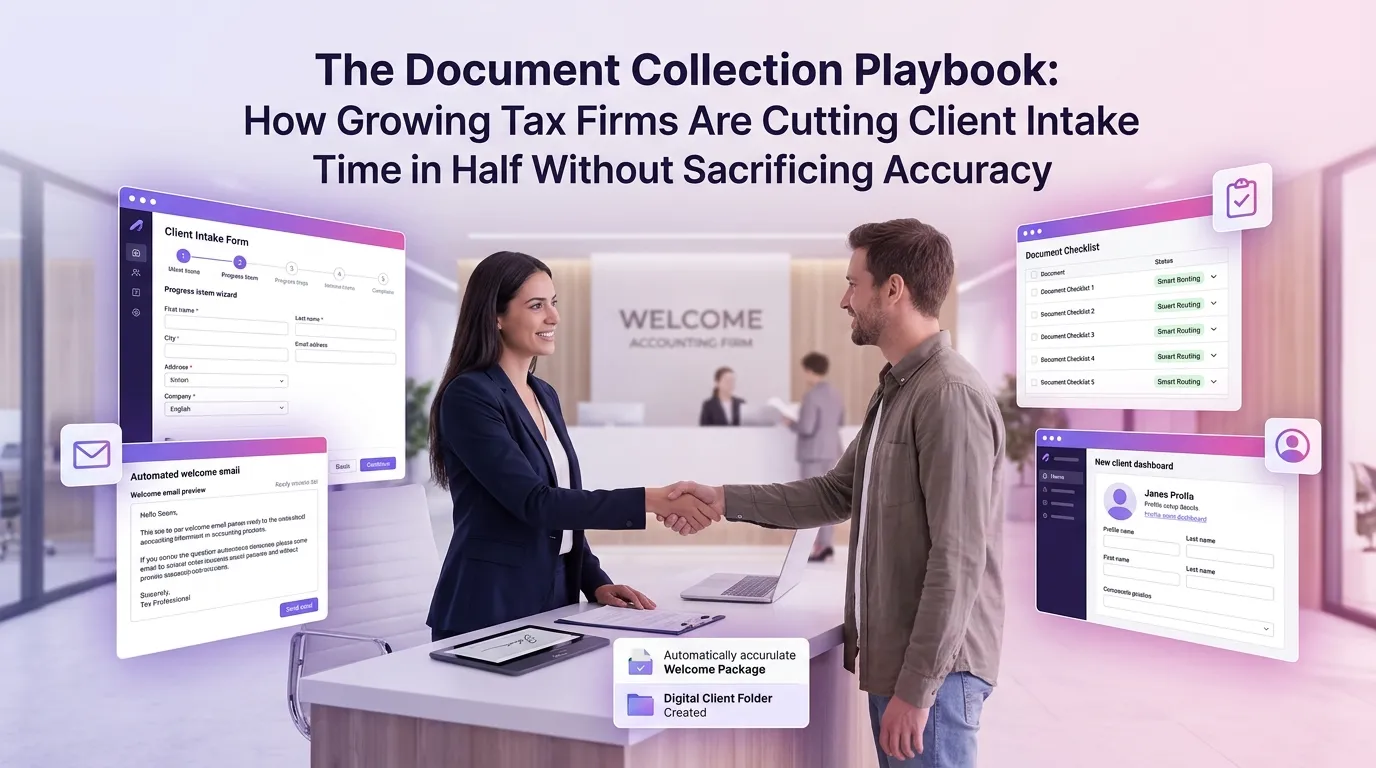
The Document Collection Playbook: How Growing Tax Firms Are Cutting Client Intake Time in Half Without Sacrificing Accuracy
13 min read